


Arizona Placemakers: Lorenzo Perez
By Christina Noble
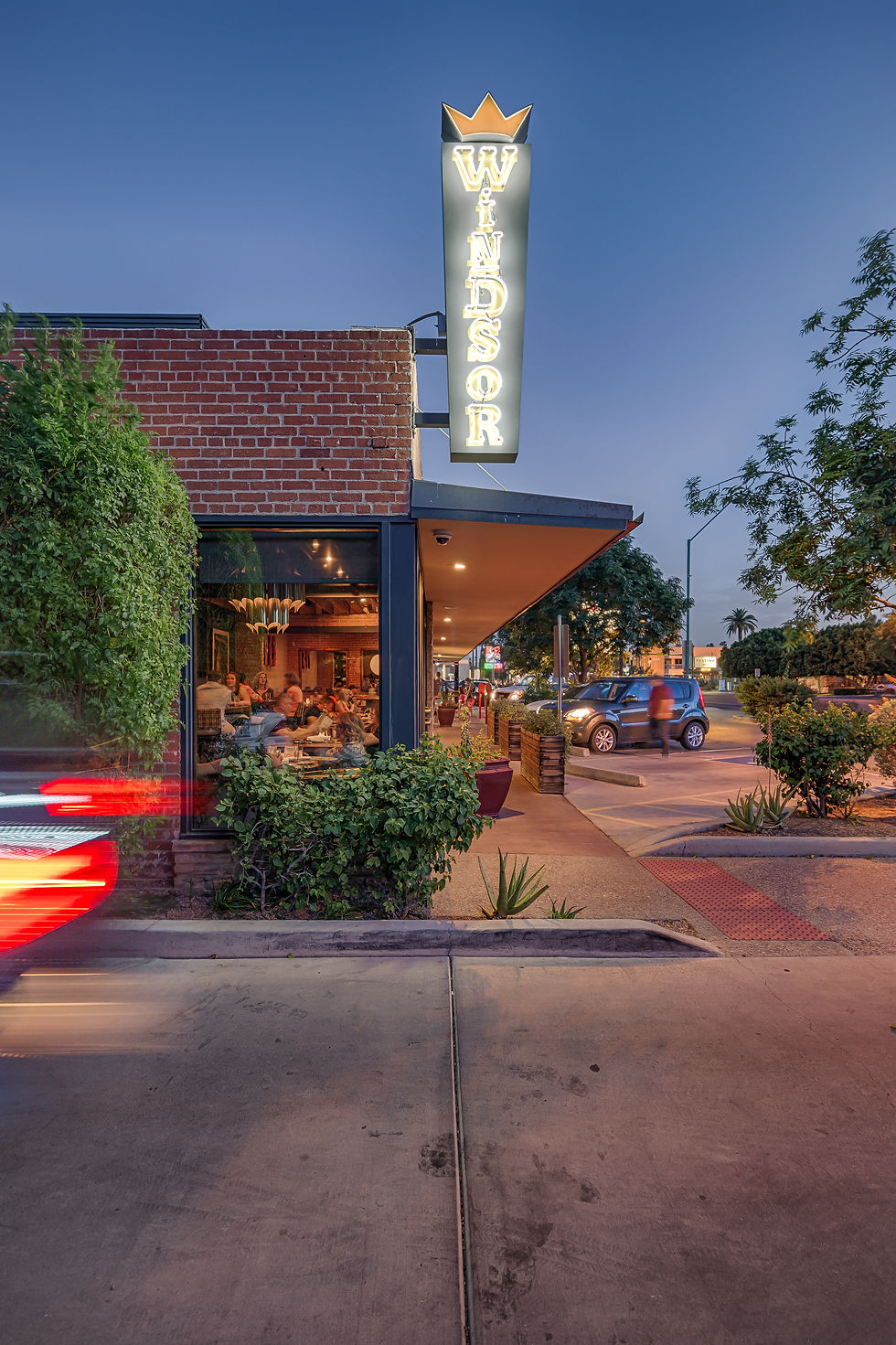
For Lorenzo Perez, every forgotten building is a chance to prove what Phoenix can become. Few developers have shaped Phoenix’s sense of place like Lorenzo, co-founder of Venue Projects, whose adaptive reuse destinations include Windsor, The Orchard, and The Newton. A self-described “stubborn optimist,” he transforms forgotten spaces into neighborhood anchors that celebrate the stories embedded in Arizona’s built fabric. In our conversation, Lorenzo reflects on the formative experiences that taught him to take risks, the philosophy behind Venue’s “Holistic ROI,” and his legacy of service and impact.

Q: You’ve built a career around creative problem-solving. Were you always willing to take risks?
A: Yes, though I still grapple with fear of failure. I'm intentional about taking calculated risks because that's where you grow the most. My father is a risk-averse guy. I love him to death, and to be fair, we didn’t have the money to take risks. That shaped me. I remember thinking, I want to travel. I want to own things. I want to try stuff. My mom was also bold and entrepreneurial, but she followed my father’s lead. I could see her regret, and that made a deep impression. I didn’t want to live with that kind of “what if.” My best friend in high school had a dad who was a self-made entrepreneur, a scrap-metal broker, and he groomed his kids to think like business owners. Just being around their family was transformative. I got to sit in on family conversations and hear his business coaching. They created abundance because they took risks.
Q: What first drew you to shaping places, to the intersection of design, development, and storytelling?
A: Early in my career, I went to work on Bank One Ballpark. That project was fortuitous because it ignited what's happening in downtown today. I had mixed feelings about the project: excited to be part of bringing professional sports downtown, but sad about tearing down heritage warehouses with cultural and historical significance. It introduced me to public-private partnerships, large-scale construction, design collaboration, archaeological surveys, and adaptive reuse.

Q: Every developer has projects that test them. Have you had one that went off course or taught you a lesson you didn’t expect?
We've had failure in some aspect in every single project. We've never lost a property, but we've had projects go well over budget and had to pivot, adjust, and evolve our concepts. In adaptive reuse, many unforeseen conditions arise. For example, in the hotel project, we discovered structural issues that cost an additional $1 million to fix. But this challenge also created an opportunity to incorporate a rooftop bar. I've learned that something will never go as planned, and I view failures as things that didn't go as expected rather than as intentional failures. These experiences have taught us to be adaptive problem solvers.
Q: You’re known for tackling projects many would walk away from. What drives that impulse? Creativity, curiosity, stubbornness?
A: All of the above. I love challenges. I’m competitive and love solving problems. That's why I ended up in design. It's all problem-solving. I'm always thinking about what I could do with ugly or terrible buildings. I joke with brokers to bring me the weirdest, ugliest, most broken pieces of real estate because solving those problems creates value. I love the design challenge of unusual contexts. I'm stubborn too, because I believe someone needs to make these projects happen.

Q: What is it about giving old buildings new life that keeps you inspired?
A: Initially, our first few projects were coincidental opportunities. The Orchard was our first acquisition, an old citrus nursery with a heritage house from the ‘20s. We dug into the history and discovered it was the epicenter of a prominent citrus farmstead owned by H.H. Wasser, one of the founders of the Arizona Water Users Association and of John C. Lincoln Hospital. That experience informed our storytelling process and approach. Adaptive reuse makes you aware that you're a steward, taking over something created for another purpose and writing the next chapter.
Q: You’ve shared your idea of five returns—emotional, social, cultural, environmental, and economic. Tell me more.
A: We call it Holistic ROI. If we don't get emotional, social, cultural, environmental, and economic return on investment, we don't do the project. Our company's mission to "create and inspire, serve" has been our moral compass. We want to do meaningful, creative work that makes us happy and lifts our vibration, while inspiring others with forward thinking. I was influenced by Danny Meyer's book Setting the Table. Meyer puts economic return last, with the premise that if you take care of all these other things, the money will follow.
Q: How does that philosophy influence who you choose to partner with and how you define success?
A: It's helped us in a few ways. Lenders love our pro formas. We keep it simple. I was an estimator before I was a developer. Our pro formas are super clean, which makes them easy to understand without hidden complexities. It's also a great way to vet investors and ensure aligned capital. We need partners who share our mission and approach. Many of our investors have already made their money elsewhere, but love our holistic approach because it gives them joy beyond financial returns. If potential partners laugh at our holistic ROI approach, we know they're not the right fit. They'll just be concerned about ROI, and will probably be difficult to work with. We need patient capital because these projects sometimes take longer than expected.
Q: You’ve spoken about legacy in such a grounded way. How do you define it for yourself?
Lorenzo: For me, legacy is about making a positive impact that improves the lives of others. I was influenced by my mentor, Mr. Sheinbein, who, on his deathbed, encouraged me not to settle and to do something meaningful. I don't need to be the richest person in the world, but I want to have made a difference. Our mission is to "Create, Inspire, Serve," creating value and economic opportunity, inspiring others to chase their dreams through mentoring, and serving by sharing our gifts. Legacy is about having made a positive impact through your work, your process, and your approach - even if it's influencing a new generation of developers to see value in existing places or to develop with conscience and purpose.
Q: If you had to capture Phoenix in one word today, and then one word for the future, what would you choose?
A: For today, I would say "progressing" because it's definitely in transition and evolving. For the future, I would say “envy.” I'm a hometown native boy. I hope one day we'll stand back and people will say, “That city is unbelievable!” Phoenix is well-positioned to be an environment where we can test new built form, new environments, and new strategies. We can be optimistic visionaries. Phoenix has always been a place where people experimented with new ideas. I hope it becomes the envy, because a lot of people are counting us out, but in the end, constraints drive creativity and innovation.




Comments